High-Protein Oat Meal Prep: Baked and Overnight Oats

Make busy mornings easier with two practical ways to prepare oats ahead. This high-protein oat meal prep guide covers warm baked oats, creamy overnight oats, storage advice and simple ways to vary your breakfast throughout the week.
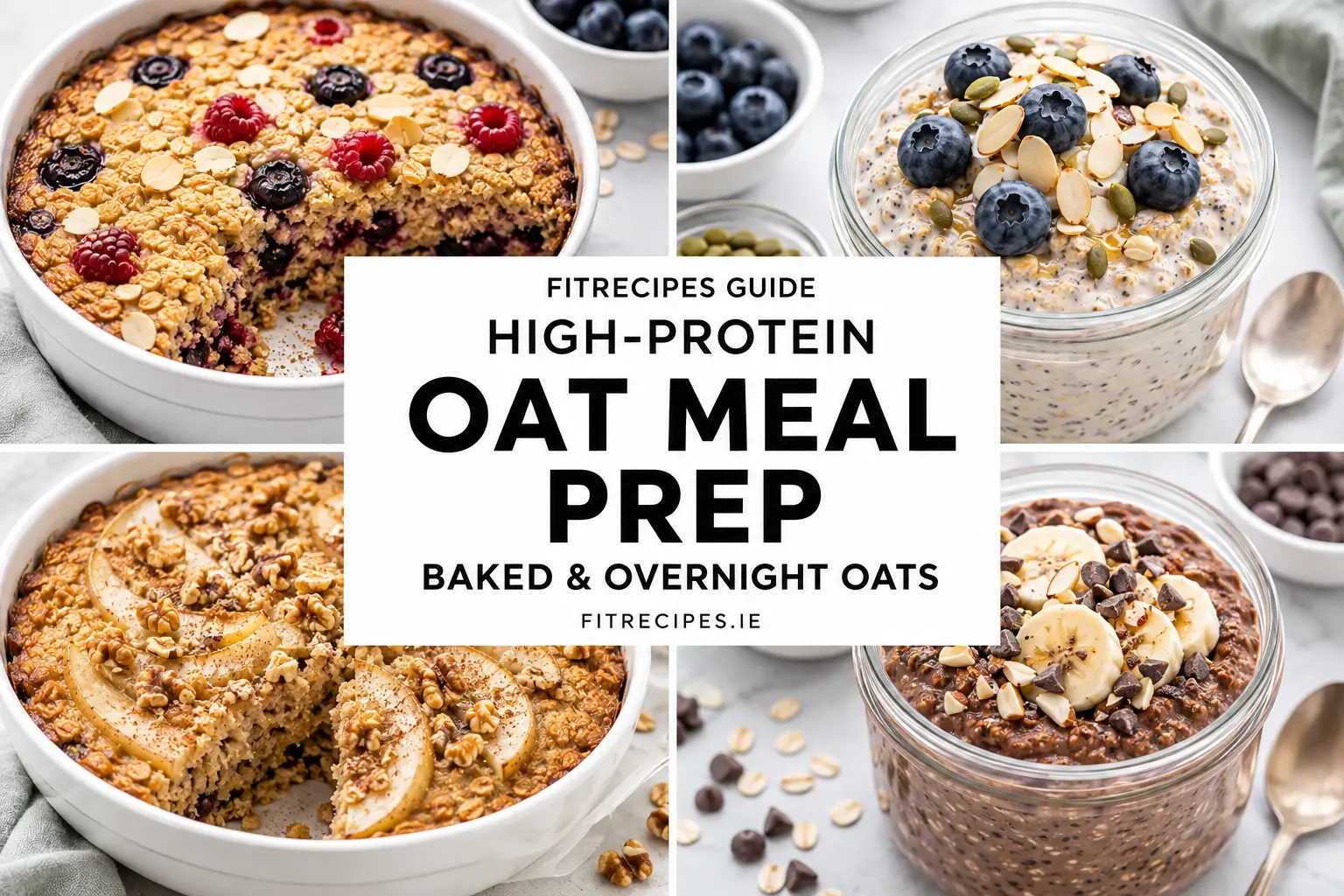
Preparing breakfast ahead can make busy mornings easier, but meal prep doesn't have to mean eating the same bowl of porridge every day. Oats are especially useful because you can bake them into a warm breakfast or soak them overnight for a creamy, chilled option.
Both methods are easy to adapt with Greek-style yoghurt, cottage cheese, milk, eggs, fruit, seeds, nut butter or protein powder. By changing just a few ingredients, you can prepare several breakfasts without making every portion taste the same.
This guide explains how to meal prep high-protein oats using both methods, how to get the texture right and how to store each portion. For more make-ahead ideas, explore our Meal Prep Recipes collection.
How to Meal Prep High-Protein Oats
Start by deciding whether you want one large batch or several individual portions. Baked oats are convenient when you want to mix everything once, bake it in one dish and divide it into servings. Overnight oats work especially well when you want breakfast portioned into jars and ready to eat straight from the fridge.
For most households, it is practical to prepare enough for the next two or three mornings. You can then make a fresh batch later in the week or freeze suitable baked oat portions for another day.
Protein content depends on the full recipe, not the oats alone. Greek-style yoghurt, cottage cheese, eggs, milk, and protein powder can all contribute protein, while fruit, spices, and toppings add different flavours and textures.
Method 1: Baked Oats for Meal Prep
Baked oats are ideal when you prefer a warm breakfast or want to prepare several portions in one dish. Depending on the recipe, the finished oats may be soft enough to eat with a spoon or firm enough to slice and carry in a container.
The basic process is straightforward. Combine the wet ingredients, mix in the oats and any dry ingredients, then transfer the mixture to a suitable baking dish. Follow the temperature and cooking time given in your chosen recipe, as these can vary depending on the amount of liquid, fruit, eggs and protein powder used.
Prepare One Dish and Portion It Afterwards
Baking a large batch saves time because you only need to mix and cook the ingredients once. Once the oats have baked and cooled, divide the dish into individual portions. Smaller portions are easier to store, reheat and pack for the next morning.
If you want different toppings during the week, keep the baked base fairly simple. You can serve one portion with yoghurt and berries, another with banana and nut butter, and another with warm fruit or a little cinnamon.
Keep the Texture Soft
Protein powder absorbs liquid and can make baked oats firmer or drier than expected. Use the quantity stated in the recipe rather than adding a large extra scoop. Yoghurt, mashed banana, grated apple and soft fruit can all help retain moisture, but they may also affect the cooking time.
When reheating, add a small splash of milk if the oats have become firmer in the fridge. Serving them with Greek-style yoghurt or fruit can also add moisture without requiring a longer reheating time.
Method 2: Overnight Oats for Meal Prep
Overnight oats require no cooking. Mix rolled oats with milk, yoghurt, or another suitable liquid, then refrigerate until they soften. Chia seeds are often included because they absorb liquid and help create a thicker, creamier consistency.
Preparing the mixture directly in individual jars or sealed containers makes this method especially convenient. In the morning, you can stir the oats, adjust the consistency and add any toppings that are better kept fresh.
A Practical Starting Ratio
For one generous serving, a useful starting point is 50g of rolled oats, 150ml of milk, 100g of Greek-style yoghurt, 20g of protein powder and 10g of chia seeds. These proportions create a thick and creamy breakfast while providing enough liquid for the oats and chia seeds to soften.
The exact amount of liquid may need to change depending on the protein powder brand, the yoghurt's thickness, and the consistency you prefer. If the oats are too thick in the morning, stir in a little more milk. If they are too loose, add a small amount of yoghurt or leave them to rest for longer.
Mix Protein Powder Without Lumps
Protein powder is easier to distribute when you mix it with the yoghurt and some milk before adding the oats. Stir these ingredients into a smooth base, then add the oats, chia seeds and remaining liquid.
This helps prevent dry pockets of powder and produces a more even texture. This is particularly useful with whey protein, which can clump when added directly to a thick oat mixture.
Choose When to Add the Fruit
You can mix banana, grated apple, and berries into overnight oats during preparation if you want their flavour to spread through the whole jar. For fresh fruit you want to keep firm, add it shortly before eating.
You can also add frozen berries the night before. They will thaw in the fridge and release some juice, so the finished oats may be slightly looser and more colourful. Reduce the other liquid a little if needed.
Keep Crunchy Toppings Separate
Nuts, seeds, granola and cacao nibs gradually soften when mixed into overnight oats. Store them separately and add them in the morning to keep them crunchy.
You can mix nut butter through the oats for a more even flavour or spoon it on top before serving. Nuts and nut butter add protein, but their serving size also affects the breakfast's overall nutrition.
Baked Oats or Overnight Oats: Which Is Better?
Neither method is better for everyone. The right choice depends on how you like to eat breakfast and how much preparation you want to do in the morning.
Baked oats are likely to suit you if you prefer a warm breakfast, enjoy a firmer or cake-like texture and want to prepare one larger dish. You can also freeze them in individual portions when the recipe is suitable for freezing.
Overnight oats are a better fit if you want a no-cook breakfast you can store in its serving container. They are quick to take from the fridge, although you may still want to stir in a little milk and add fresh toppings before eating.
You do not have to choose one method for the whole week. Preparing a small baked batch and two jars of overnight oats adds variety while keeping the work manageable.
How to Add More Protein to Oats
Oats contain some protein naturally, but a genuinely high-protein breakfast normally relies on the other ingredients in the recipe as well. The most suitable option depends on whether you are making baked oats or overnight oats.
Greek-style Yoghurt
Greek-style yoghurt adds protein and gives overnight oats a thick, creamy consistency. You can also serve it alongside baked oats or include it in some baked mixtures. Products vary considerably, so check the nutrition label if protein content matters to you.
Cottage Cheese
You can blend cottage cheese into a smooth mixture before combining it with the oats. This removes the noticeable curds and creates a creamy base with a mild flavour. It works in both chilled oat pots and selected baked recipes.
Protein Powder
Protein powder is convenient, but more is not always better. Adding too much can make baked oats or overnight oats dry, with a thick, slightly chalky texture. Start with the amount specified in the recipe, and adjust the liquid only after you see how that particular powder behaves.
Eggs and Milk
Eggs help bind baked oats and add protein. Milk adds both liquid and protein, although the amount varies between dairy and plant-based products. Check the label rather than assuming that every milk alternative has the same nutritional profile.
Seeds, Nuts and Nut Butter
Chia seeds, nuts, and nut butter can add protein, fibre, flavour, and texture. They work best as part of the complete recipe rather than as the main protein source. Their serving size also affects the calories and fat in the finished breakfast.
For more high-protein breakfast inspiration, explore our High-Protein Breakfast Recipes.
How to Keep Oat Meal Prep Varied
A simple base can taste very different once you change the fruit, spices and toppings. Banana works well with cinnamon, chocolate or peanut butter, while apple and pear pair naturally with cinnamon or mixed spice. Berries bring a sharper flavour that balances creamy yoghurt and vanilla protein powder.
You can also change the texture. Blend the mixture before baking for smoother oats, leave the rolled oats whole for more bite or add chia seeds to make overnight oats thicker. Keep crunchy toppings separate until serving.
Another approach is to prepare one neutral base and divide it before adding the final flavours. One jar can become chocolate and raspberry, another vanilla and blueberry, and another banana and nut butter. This gives you variety without requiring three completely separate recipes.
A Simple Oat Meal Prep Routine
Choose Two Flavours
Select one baked oat recipe and one overnight oat recipe with overlapping ingredients. For example, both might use Greek-style yoghurt, banana and berries. This keeps the shopping list manageable while still producing two different breakfasts.
Prepare Only What You Are Likely to Eat
Think realistically about how many breakfasts you need at home. If you normally buy breakfast or eat elsewhere on certain days, leave those days out of the plan. Preparing fewer portions is better than keeping food for too long or throwing it away.
Make a Smaller Midweek Batch
Rather than relying on one refrigerated batch for the entire week, prepare enough for the first few days and make another small batch later. Alternatively, freeze suitable baked oat portions and defrost them in the fridge when needed.
Pack Toppings at the Same Time
Place dry toppings in small separate containers while preparing the oats. This makes breakfast genuinely ready to take with you and prevents nuts, seeds or granola from becoming soft overnight.
How to Store Prepared Oats
Keep Prepared Oats Chilled
Store overnight oats and cooled baked oats in covered containers in the fridge. Always check the use-by dates and storage instructions for milk, yoghurt, and other perishable ingredients in the recipe.
Cool and Store Baked Oats Properly
Allow baked oats to cool before dividing them into portions and transferring them to airtight containers. Store the portions in the fridge and eat them within three days, unless the individual recipe provides different storage guidance.
If you will not use every portion within that time, check whether the recipe is suitable for freezing. Freezing individual portions makes it easier to defrost only what you need.
Store Overnight Oats for up to Three Days
Most overnight oats can be kept in sealed containers in the fridge for up to three days. Always use fresh ingredients and check the use-by dates on milk, yoghurt, and other perishable additions.
The oats will continue to absorb liquid while stored, so the mixture may thicken by the second or third morning. Stir in a small splash of milk before serving if needed. Keep crunchy toppings and delicate fresh fruit separate until you are ready to eat.
Reheat Baked Oats Only Once
You can eat baked oats cold if you cook and store them properly. If you prefer them warm, reheat only the portion you intend to eat and make sure it is hot throughout. Avoid repeatedly cooling and reheating the same portion.
Freeze Suitable Portions
If the chosen recipe is freezer-friendly, wrap or seal individual baked oat portions once they have cooled. Defrost a portion in the fridge and follow the recipe’s reheating guidance.
Overnight oats with yoghurt and fresh fruit may lose some texture after freezing, so refrigeration is usually the better option. Check the freezer guidance on the individual recipe before freezing any prepared oats.
More Make-Ahead Oat Ideas
Oats also work well for portable snacks. Our No-bake Protein Bars with Almond Butter are an easy option when you want something prepared ahead without using the oven.
You could also make Peanut Butter Protein Balls or try the No-bake Chocolate Coconut Protein Bars. Prepare them alongside your breakfast meal prep when you want a portioned snack ready for later in the day.
Final Thoughts
High-protein oat meal prep can be as simple as one small tray of baked oats, a couple of overnight oat jars or a combination of both. Baked oats provide a warm, portionable breakfast, while overnight oats offer a creamy, no-cook option ready straight from the fridge.
Choose recipes that suit your routine, prepare only the portions you are likely to use and keep fresh toppings separate until serving. Once you have a reliable base, changing the fruit, spices and toppings makes it easy to keep breakfast varied from one week to the next.
Frequently Asked Questions
You can store overnight oats in a sealed container in the fridge for up to three days. Use fresh ingredients and check the use-by dates on milk, yoghurt, and any other perishable additions. Add delicate fruit and crunchy toppings shortly before serving for the best texture.
Yes. Keep only the portions you plan to eat within the next three days in the fridge. If the recipe freezes well, let the remaining portions cool, then freeze them the day you prepare them. Defrost each portion in the fridge when needed.
Yes. Greek-style yoghurt, cottage cheese and milk can all add protein without using protein powder. You can blend cottage cheese with milk for a smoother texture. Check the nutrition information for the complete recipe, as the final protein content depends on the ingredients and portion size.
A good starting point for one generous serving is 50g of rolled oats, 150ml of milk and 100g of Greek-style yoghurt. If you add protein powder or chia seeds, you may need a little more liquid because both absorb moisture. If it becomes too thick, add a small splash of milk before serving.
No, but they need enough time to absorb the liquid and soften. Around six hours works well for most recipes, which is why leaving them in the fridge overnight is convenient. A shorter soaking time may produce oats with a firmer, chewier texture.
Many baked oat recipes can be frozen, but check the storage guidance for each recipe. Let the oats cool, divide them into portions, and freeze them in sealed containers. Defrost a portion in the fridge, then reheat it until hot throughout. Reheat each portion only once.